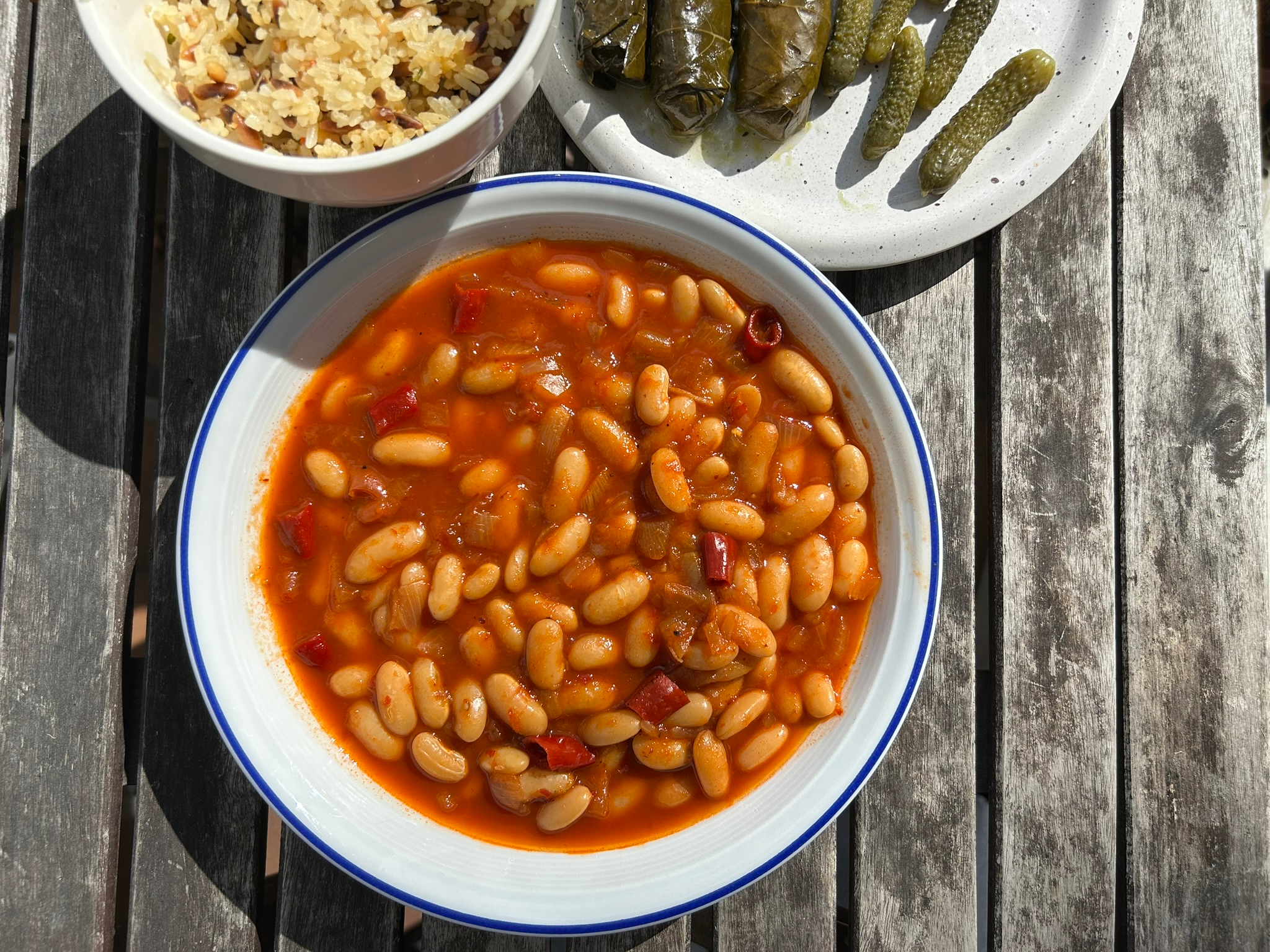
How I got to know this dish
This year, I decided to travel to Istanbul for the first time ever, and like with any other holiday, I had spent multiple hours researching the traditional food and must-try dishes of Turkey. That’s when I stumbled across Baking Hermann, a food blogger who shares dishes that are traditionally vegan. More specifically, I watched this youtube video about the turkish cuisine, and I instantly knew that Kuru Fasulye will be one of the dishes I have to try.
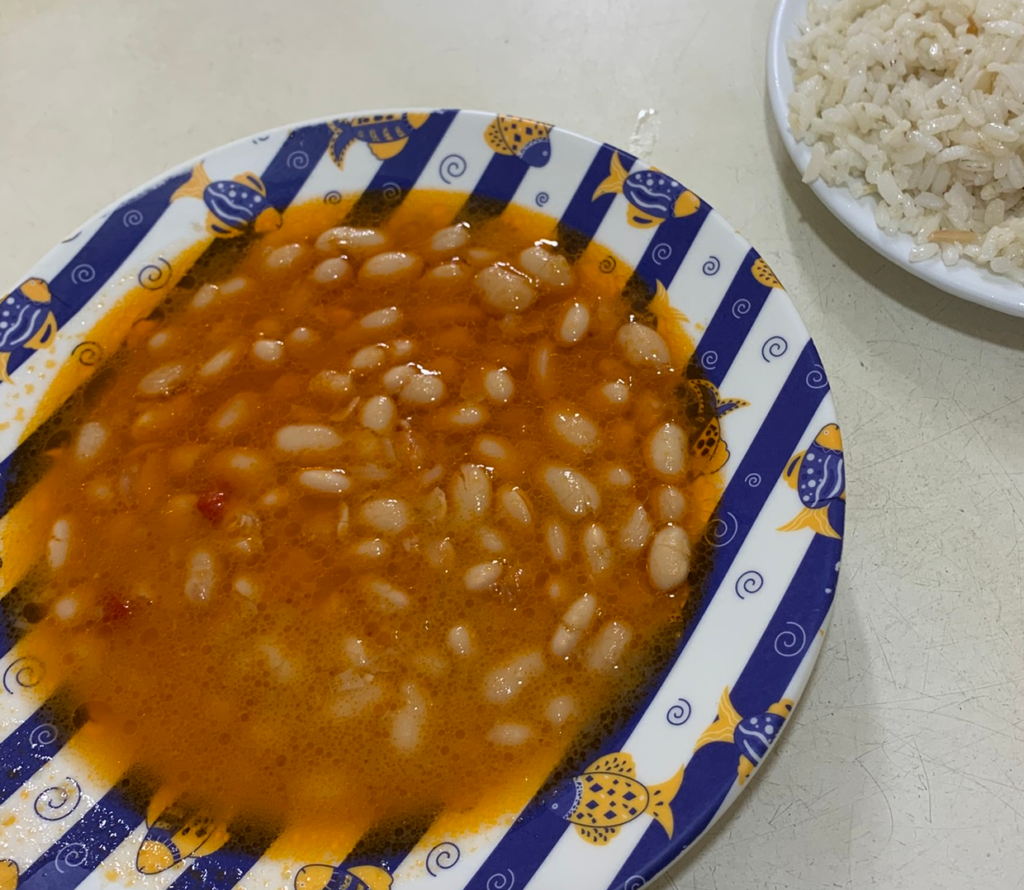
The first evening I arrived, I went to an “esnaf lokantasi”, which is a restaurant similar to a canteen, where locals go to eat Turkish home cooking dishes for non-tourist prices.
Anyway, the first thing I ordered was a plate of this delicious bean stew with some pilaf, and it was so delicious that I came back every day just to eat a plate of Kuru Fasulye from the same place.
I definitely recommend visiting Istanbul once in your life, not just for the food (even though it is quite amazing). The city is both historic & cool. It is one of the most beautiful cities I have ever been to, and the people were super warm and welcoming.
How to make Kuru Fasulye with Turkish Pilaf
What I really love about this dish is its simplicity. Even though you only need a handful of ingredients, most of them provide a strong, and unique flavour to this dish and combined results in a comforting, peppery stew.
Prepare the beans
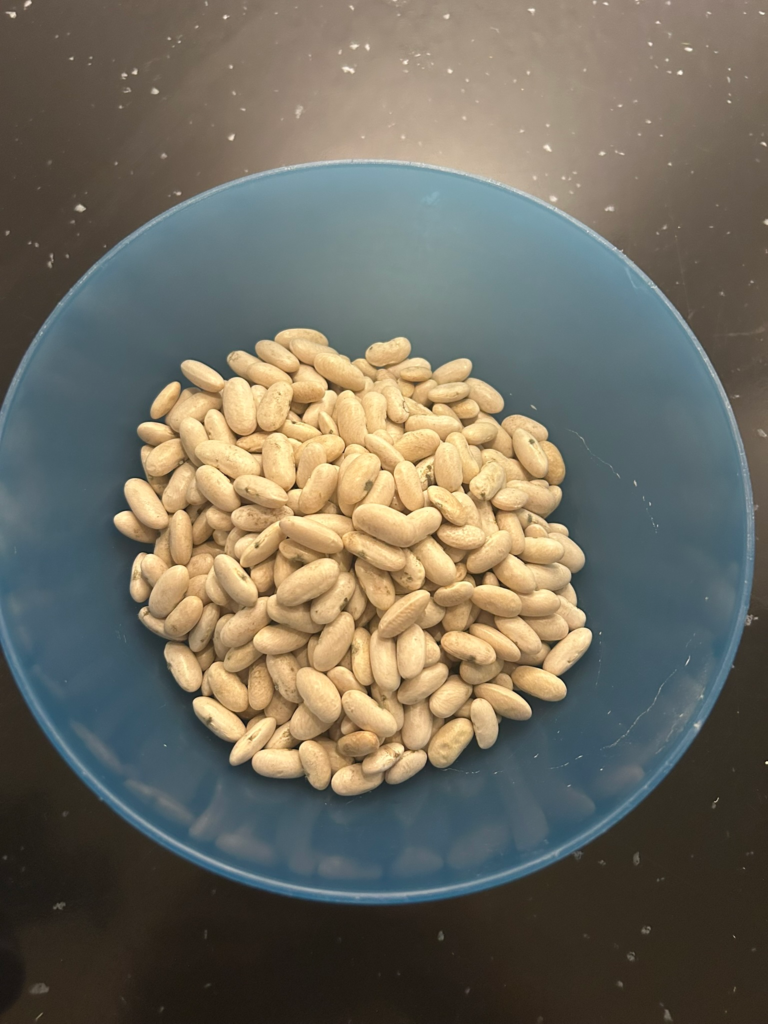
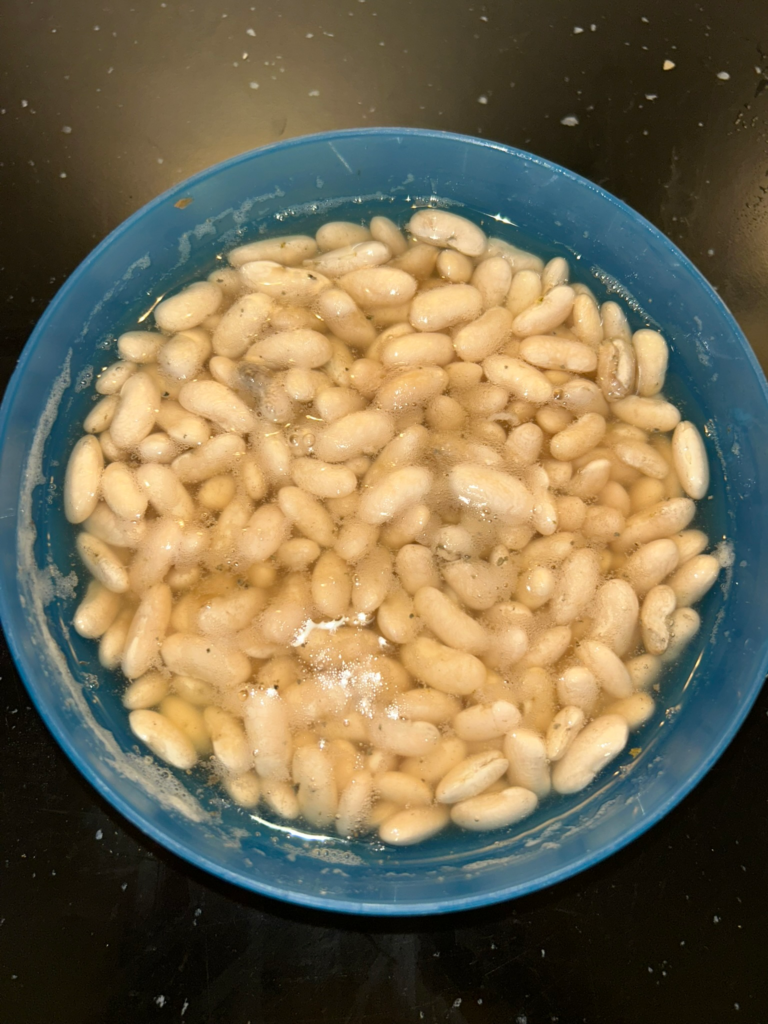
As white beans are the main component of this dish, there is no way around using dried beans. They absorb more flavour and result in a better texture, so soak them in salted water overnight. If you forget to do it, you can still make it work by cooking the dish in a pressure cooker, though.
Build a flavour base
Just like with many Turkish dishes, start by sautéing onions in a lot of olive oil. Don’t be afraid of the amount of oil, as it plays an integral role in enhancing and uniting all other flavours in the dish.
The next step is to add two pastes providing the main flavours for the dish: Tomato and, more importantly, Biber Salçası, a spicy Turkish pepper paste. Even though many big grocery stores offer the latter, I still recommend buying it from your local Turkish or Middle Eastern store, to support small businesses and get the good quality stuff.
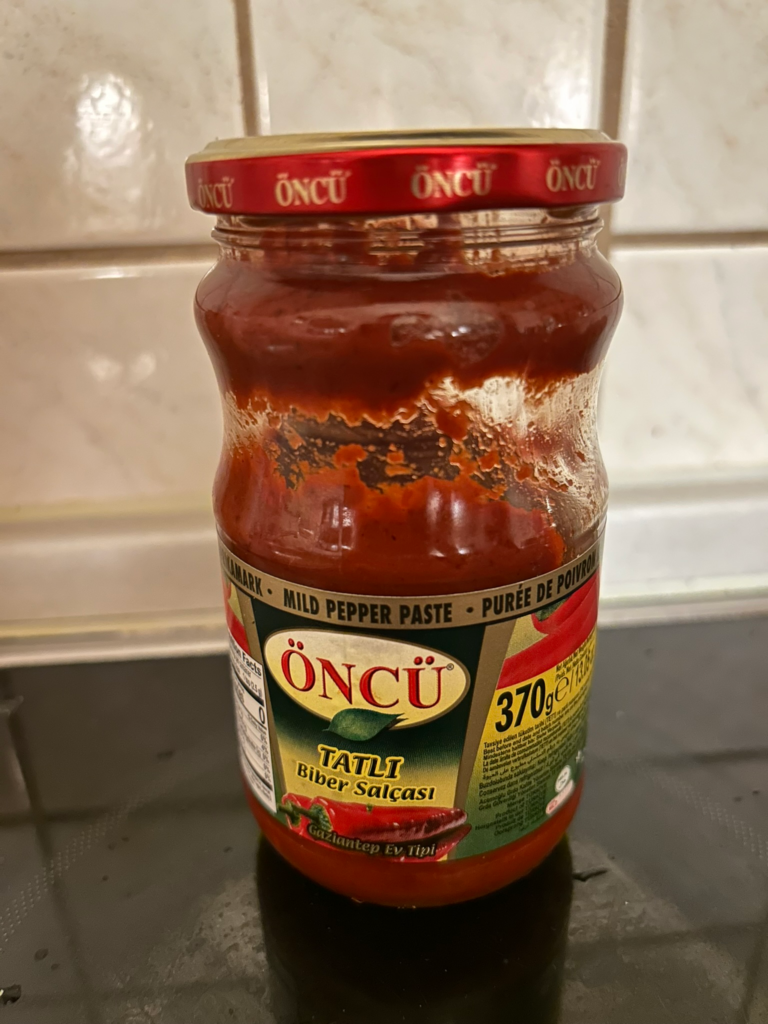
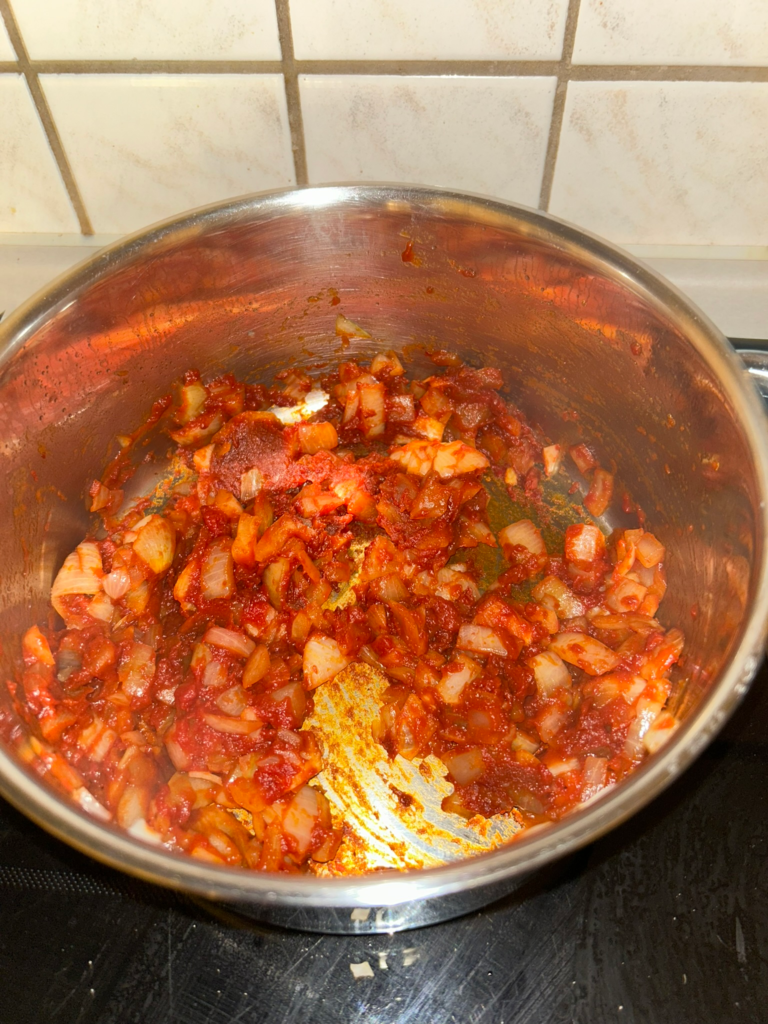
We will also add more than you would expect, but trust me, when you break it down in the olive oil, it will create the most amazing taste and smell.
Cook the beans
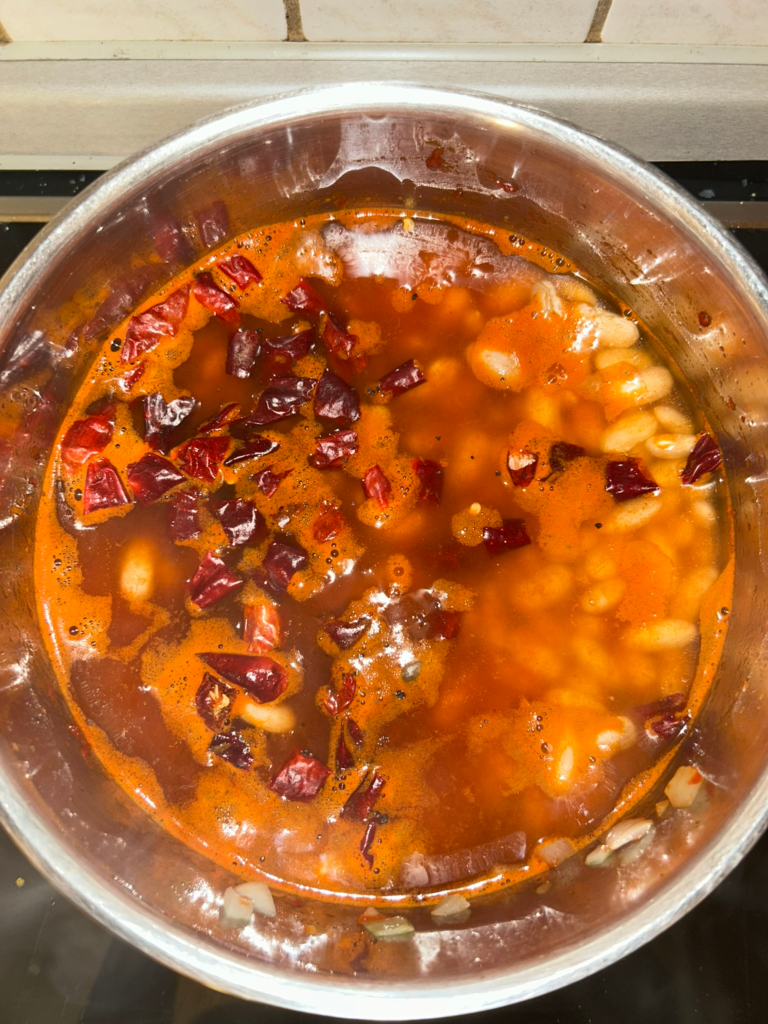
Drain and wash your soaked beans and add them to the pot alongside water, salt, black pepper, and some dried chillis (you can adapt the amount to your tolerance). Bring it to a boil, and let it simmer until the beans are cooked. You have to be patient, as the beans should easily be smashable with your fingers, which will take at least one hour. But don’t worry, you can prepare your rice pilaf in the meantime.
There are some variations, which use green, instead of white beans. In this case, you can skip the whole soaking process, and the cooking time will reduce to 10-15 minutes. Other versions also throw in chunks of root vegetables like potatoes or carrots.
Don’t forget to adjust the seasoning with salt and pepper to your taste.
Make a simple pilaf
This simple pilaf just needs a few extra steps, but it will elevate your white rice. Optionally, start by sautéing finely diced onion and garlic in some olive oil or vegan butter.
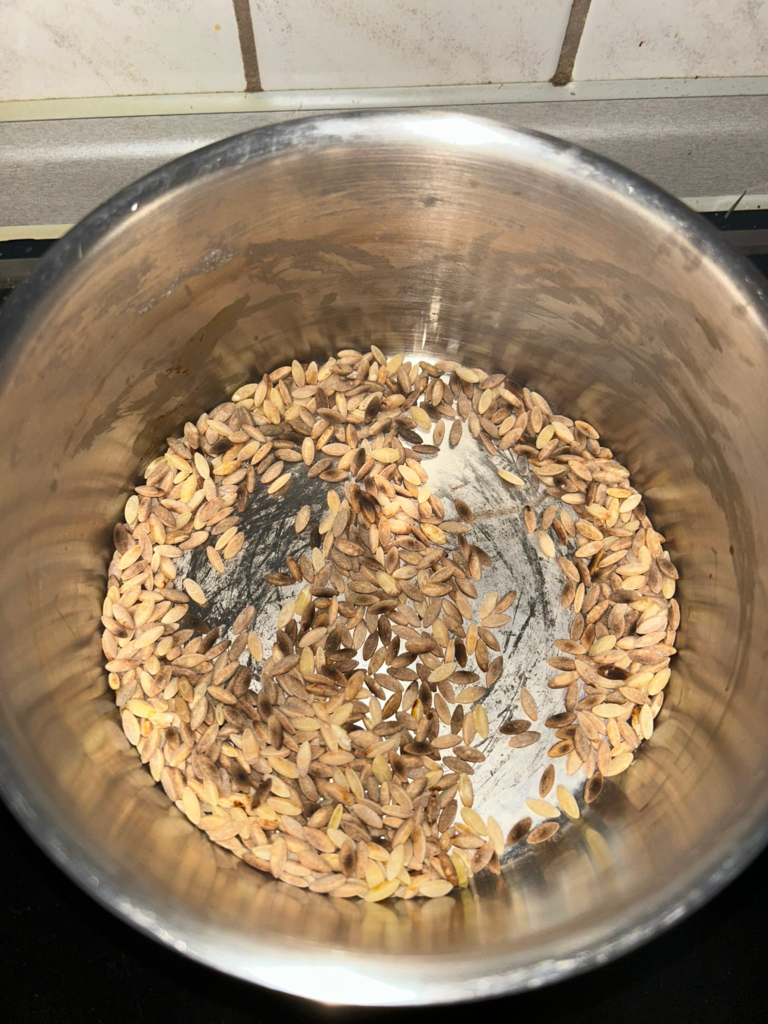
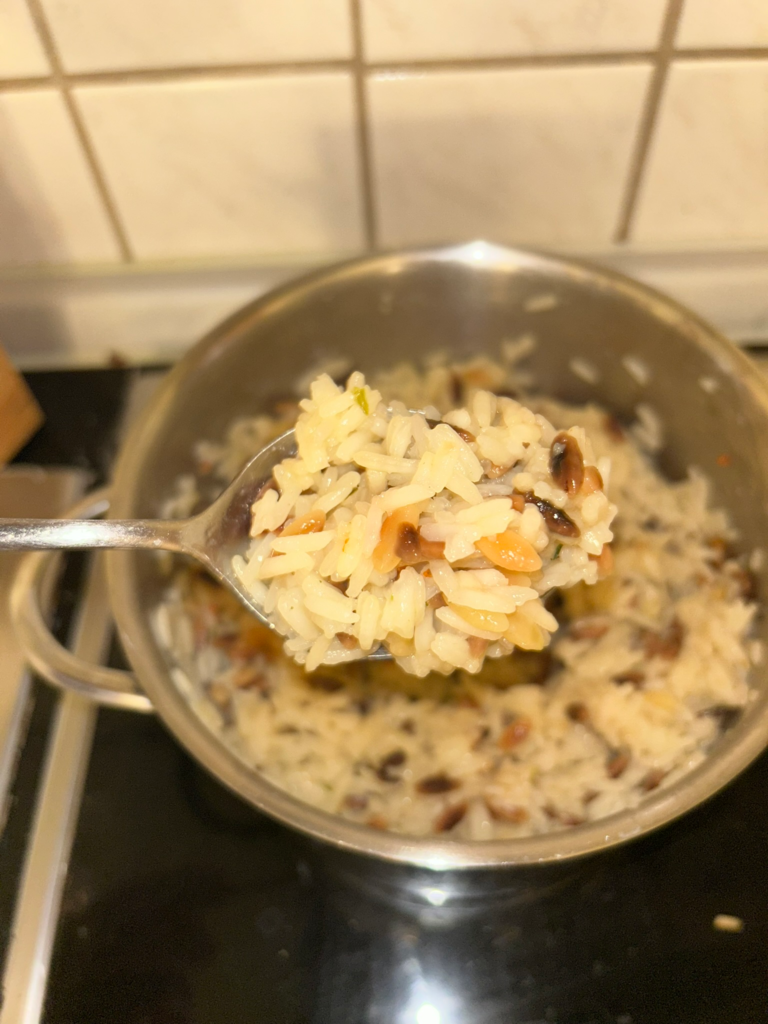
Then add some orzo and toast it on medium heat until it develops a light brown colour (I did burn a few in the picture below, just remember to keep stirring and keeping an eye on it).
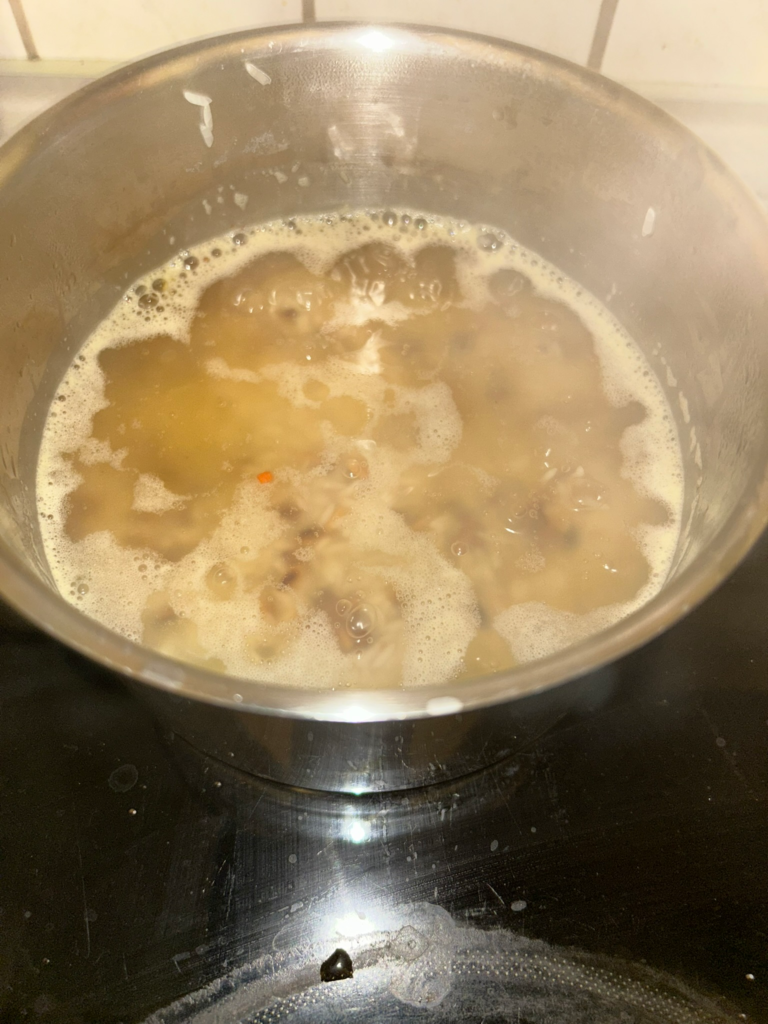
Add washed rice and cook it in vegetable stock for additional flavour: Bring it to a boil, steam on low heat, and fluff the mixture once cooked.
The Recipe
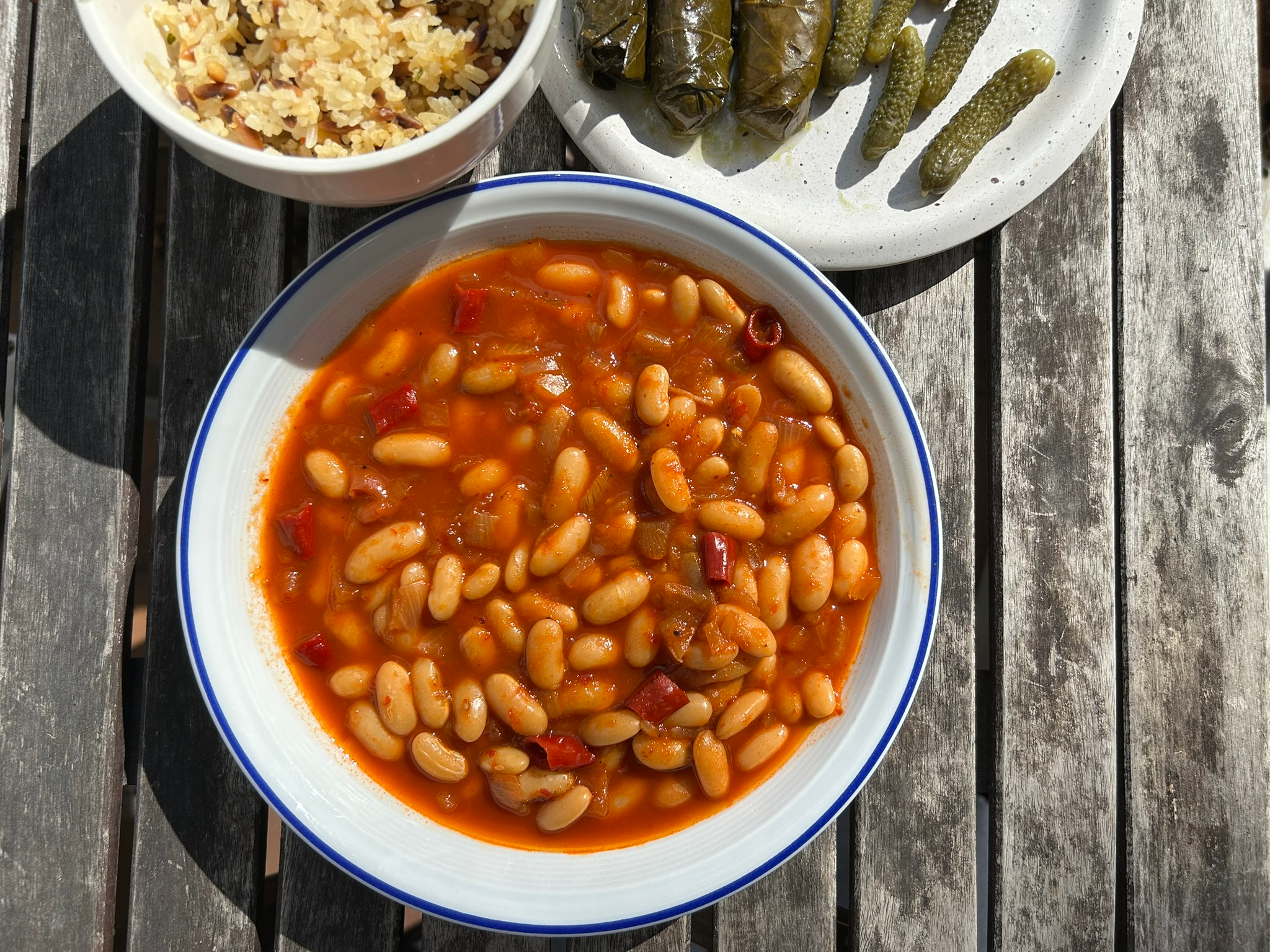
Kuru Fasulye with Pilaf
Zutaten
Method
- Soak the beans in salted water overnight. Drain and wash them afterwards.
- To a medium pot, sauté the onions on medium heat until translucent.
- Add the tomato and pepper paste, and cook them while stirring, until they have broken down and are mixed with the onions.
- Add white beans, water, black pepper, the dried chillis, and a good amount of salt (at least two tablespoons) to the pot. Bring it to a boil, reduce the heat to low, and let it simmer until the beans are cooked. You should be able to easily smash them with your fingers, which will take at least one hour.
- Add salt and black pepper to taste.
- Optionally, sauté onion and garlic in some olive oil until fragrant.
- Add the orzo, and toast it until slightly brown. Continuously stir, to prevent burning.
- Add the rice with vegetable stock. Bring it to a boil, reduce the heat to low, and steam with a lid on. Fluff the mixture with a fork, once it is cooked.